Showing posts with label India. Show all posts

Monday, September 9, 2013

Journey or the Destination?


I was recently discussing with a friend of mine about the fact whether a journey or the destination is more important in our lives, she and I both agreed  that it is the journey.


Both of us remember the ways we traveled for work more than the work benches during last 5 years. One another friend thinks just the opposite. He doesn't remember the journey to his office but he remembers the table, the office room and the computer screen, he has used in his last places of work.


When I was looking for jobs in industry and in one of the few interview offers I got, I was asked what do I relish the journey of doing a project or the target. I proudly said the journey, I like the process of working, I like the knowledge I gather while doing a project, I cherish the skills I get to learn, I feel very happy if the projects results into a fruitful piece, but if not I feel contended that I got the opportunity to work there and I got to know so many people through that piece of work. I did not get the job, so I guess my answer was not appreciated. I guess in  a practical  and conformers world, objectives, targets and fulfilling them via any means are most important agenda. Those who try their best but can not achieve the target, some how end up being portrayed as confused characters and society call them not useful enough. I was actually asked by my boss that instead of thinking what I want to learn, I should think which learning will help me in my career. Also it is a known unsaid rule that in work places, although during hiring a point is mentioned that care will be taken for personal growth of the employee, but my experience says that any personal interest is taken care of only when that coincides with the prime interest of the company/institute. So after all an employee is just a mean to bring more production, more money and more fame to an institute, it does not matter if that employee has benefited by doing that or not. There are huge number of people who can accommodate themselves into that need, but there are a few who cannot.


World might work in that way, but for me the process of living is more important than trying to fulfil it all the time. I prefer to learn what I want than what is needed. And I must add the point that, for wanting a life where the priorities are set by me and not by  the need of the society or a situation, I sometime feel I struggle a lot more than who accept to live in a predefined formats, made for them, by the society or the family. By following my new rule book if I can touch high achieving model defined by the society, one measure of that is money, society will  then perhaps accept my norms but till then I need to struggle for existence, I need to keep explaining my choices. And this struggle can sometimes  be hard and lonely. I might never touch that model life of rich with money and fame and remain marked as an not so successful and not worthy enough.


Then on looking around I see that  there are actually many people who are in same shoes like me, they are not fitting into any group and trying to painstakingly carve a niche for themselves, living lives build on their choices. They are not high achievers (according to the conformists world), may be because of the decisions taken by them or the choices they have made, but if you think carefully they are the ones who make this earth more versatile, they are the ones who will not look at their watch and will come forward if they see some one needs help on the road, they are the ones who will listen to you carefully before giving you opinionated virtues without even understanding what your strong points are. They are the one who bring up new dimensions to the existing world. But unfortunately they are not acknowledged by the society, for the values they add to this world mostly are uncountable and qualitative.


Some might say, it is all rubbish about journey and destination, you need to keep going and need to stay in the system, fulfill some objectives at least, to bring a change in it. If for that reason you need to bend a little that should not be an issue. That might be true, for a practical approach even for a non conformist in a world of conformers. And what I say is that by any chance if you fall into this category then  you need to have immense amount of patience, courage and a strong head. You need to be able to make decisions on daily basis and have faith in them, you need to be have voice to say a spade a spade and at all costs, you need to have strength to pave a new road through the path untravelled.


And you need to keep travelling may wherever the end is.

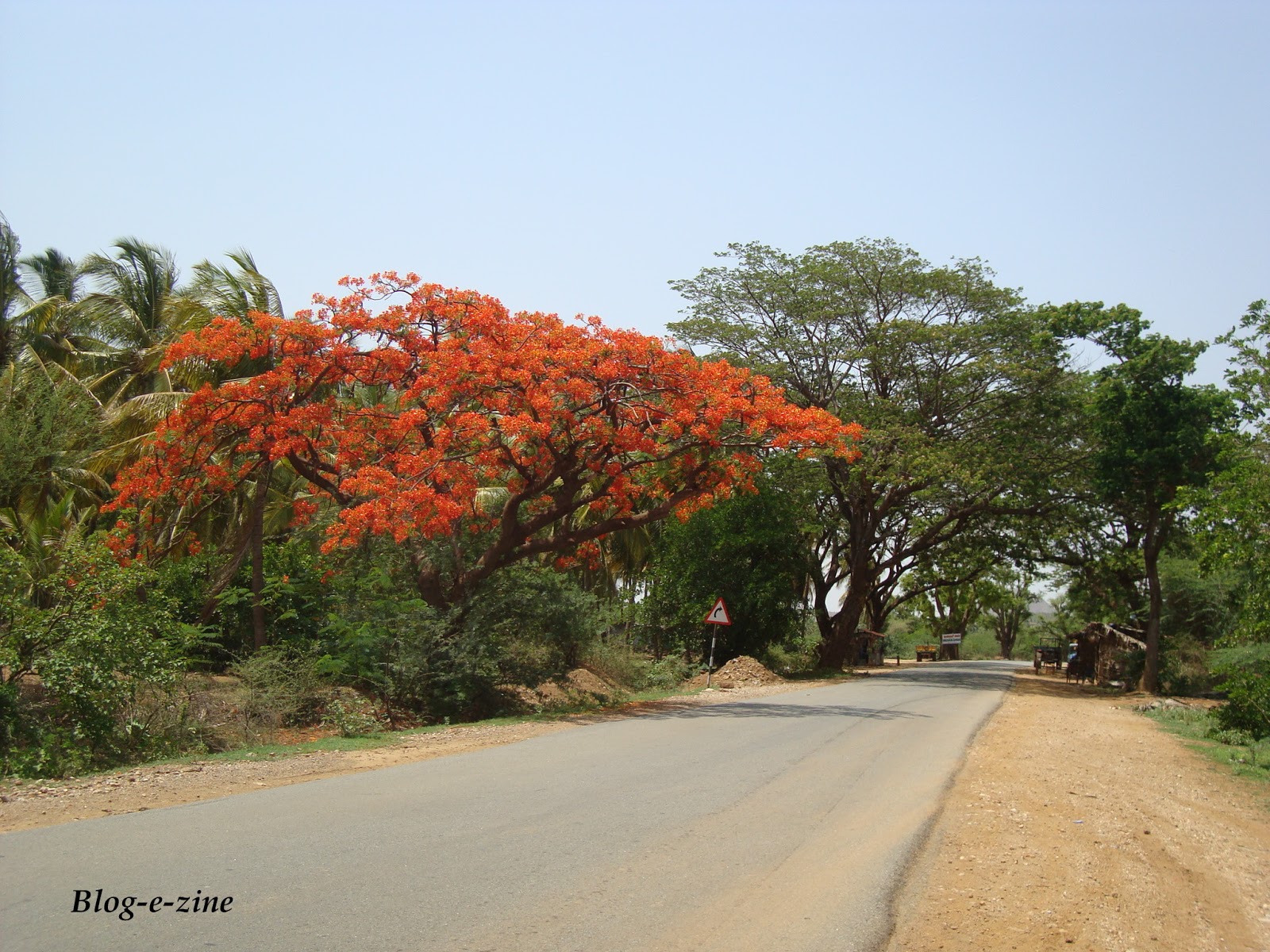
Photo courtesy: Roads from different parts of India

Monday, July 23, 2012

Peeking through the glass-holding hands with Indian folk arts

That was a Sunday afternoon. A summer afternoon. Those long afternoons of India when you want to stay inside and don't even want to peek through the glass window. On one such Sunday afternoon, I, A and J sat together and made friends with a new kind of activity called - glass painting. When I was a child I painted on glasses but using acrylic colours, glass paints were not that easily available at that time in India. So the effects were different. Thanks to my mom that I always had a stock of acrylic colours along with crayon, sketch pens or water colours to dabble them on fabric, glass, empty tins, egg cartons, stones and on anything and everything available around or outside of the house. Colours and their different textures attracted me always. I was curious to see how does the readily available Camlin glass paints (non fuss paints available in plastic tubes) could be used on glasses. How different the effect will be from acrylic paints? I had many emptied pickle/pasta sauce glass and plastic jars. I washed them and dried them. Also I was very much impressed by the folk-art craft works, done by artsy craftsy mom, specially the gond, alpona, and the warli art forms. I was excited to do and share all these with J and A. So our Sunday afternoon started with the mission of combining colours, art forms and glass as canvas. How did it go? See it for yourself!


 1. Trying it out with - Trial and error. Painting for the first time on a bottle surface!


 2. Playing with colours and patterns, also optimising the hold on the painted glass jars.


3. Together, they talked, discussed and found out way to hold the jars while painting them.


4. Can Warli men be created on a glass bottle? The struggle...


5. Peek-a-boo through a painted glass - alpona and gond...


6. Warli men are dancing!


 7. The creation and the inspiration...


8. All four of the personalised glasses with no labels and new make-overs, standing together holding their hands (invisible for many)


And I must say, this became one of the memorable summer Sundays for me! 

Glass painting - A perfect, non fussy way  to bond with a child for a busy parents, older sibling, uncles and aunts or grand parents. 

Monday, March 26, 2012

Progress report, spring vacation, mud house etc.

It is March, spring time, people in northern hemisphere and close to them are opening up from their closed and jittery fists, black wardrobe and tight work schedules. They are loosely submerging into warmth, colours and relaxed summer breaks. Oh I loved those days of European spring and then summer.

Okay that is past now (may become a future again), I am in India and we are getting heated up, monsoon and mangoes are still to come and winter vegetables have started saying good bye (well not really we also are now in supermarket age you know). But the heat is getting elevated each day. Few hours of morning dewdrops and cold breeze are vanishing fast. In the western India where we live people are complaining about dry heat, burning eyes and irritable whether. People who are living east are complaining about humidity and heat too.

Along with the change in weather cycle something else is moving on too. J has finished her class 3. She got her continuous assessment report. Teachers were happy with her and she with them. Class teacher remarked that in the final term she was extremely proactive, asking questions and participating in class activities in comparison to the last ones where she needed persuasion. This is the same remark, I heard from her day care teacher in the end of her first year with them. So this time, I told the teacher, yes I know, J takes time to feel comfortable and judge the water. The teacher smiled.

So with this we embarked into school closing for spring vacation. I have gotten over the guilt feeling of J having holidays and we don't. Now, I just plan some special days, by planning a trip, by baking  with her, by buying some books and art and craft stuff for her. J also doesn't feel gloomy for  the need of going to day care in holidays. She has made a good friend group over there and she has started finding fun with them.

Of several things she is busy doing these holidays, one is making a mud house and a pond in the back yard of her friend's house. You will get horrified when they finish their play and come home with hands full of wet mud till elbow and her dress batiked in brown. I do shout at times, but I remember my share of making chilli powder from brick pieces too. I used to get red hands, hairs and my skirt full of red brick powder! My mother used shout at me too, but with a very special smile of indulgence!

Saturday, February 25, 2012

Hampi-The forgotten empire of India

Hampi - isn't the name very exotic? And so is the place. 

Doesn't matter how beautiful place is where you live now or how many exotic places you have traveled, I bet you will find it special in Hampi- used to be the capital of great kingdom of 'Vijayanagara'. Hampi is also mentioned in Hindu mythologies of Ramayana.

I wanted to visit this place since long and the dream came true few months ago. But this fulfillment just created a lingering 'returning back and staying there more kind of a feeling.' I went with great determination to soak the beauty of the place and turn them into words. I planned to write experiences of each day. I absorbed myself into every bit of it, and ignored the previous plan completely, thinking I will do it better after finishing the trip. On return I tried to write about the place on each passing night. But then I kept faltering.

I finally decided not to trap the place with my incapable words.
And after all a lot is written on this place in several books, articles and book chapters.
Hampi - the forgotten empire of King Krishna Dev Rao has been visited by several European and Chinese travellers in several hundreds of years ago.

The place was a melting point of trade through sea, culture and politics. It was a protected kingdom. It is still. It is like a open air museum which has come out from earth. Thanks to UNESCO, this place is kept with lots of care. 
We Indians don't really care for our heritage but for Hampi this does not hold true.

Just like several historical places you will notice Hampi is also well guarded by natural hill ranges, magnificent gateways, boundary walls and nature, still now. While writing about this place I am loosing my words. I am experiencing that thousands of words which I will need to paint this place may well be produced by just a few shots...


The exceptional color match between the tree barks and the stone carved magnificent structures


The chariot structures with detailed wheels and the closeness of a built structure in south of India to that of famous Konark sun temple in East (Orissa) of India. Showing nothing but good ties and evidence of huge kingdoms of past in India


The musical pillars in Vithala temple and also in groups. Pillars are very common architectural art from Indian past. In spite of so many temples residing there, there are only few where worshiping is still carried out. According to Hindu belief, a place where the idols are broken or damaged could not be prayed. So rush of devotional tourists are observed only in few places leaving lot more silent corners for your spiritual calmness. Virupekha (another name of lord Shiva) temple is one of the temples where every day people come for worshipping. 


The decorated and detailed 'Gopurams', functioned as gateways for temple and is often observed in Dravidian styles, Pallava kings made them famous and who knows these were like the gates of gated communities we have in today's very fast changing Indian cities.


Can you see the horses and people? They are actually representing the Arabic, Chinese and European traders with horses to sell in Indian market. India is not a big market just now, it has always been actually.


This yard in front of the 'Vithala temple' use to be market for selling horses, you can find many Yallis-mythical beasts (related to mythological stories of Narsimha) in the pillars  and how beautifully they are carved.


The queens bath and other bath. Our tour guide defined it as spa from those era, where sandalwood logs were immersed in the water to give scented baths to the royal people. Life has been always very good for rich people in India.
Lotus palace (left) and elephant stables (right). This quarter of the kingdom was strictly reserved for women of royal families. Specially when the men went for wars. Lotus palace had options of water circulating all around it to get air conditioning effect in strong summer days of Hampi.


Ceiling work explaining incidents from several mythologies of 'Ramayana' and 'Mahabharatha' in several temples, palaces and quarters, natural  earthen colors were used which stayed through so many hundreds of years of weathering.


The mornings and evenings in a hidden village of Karnataka, near the Tungabhdra river (earlier may be it was known as Pampa). Did you notice the Coracle boats? Oh it was wonderful to have a boat trip  and getting immersed in the ambience, just at the dusk.


Then there were market places, cosy and laid back restaurants and so many more.


A very calm and well kept place of India. If you love history, architecture, vegetation, nature, calm places, small town character and art then go visit it.

And as you stay there please don't litter and be a responsible eco traveller.

Sunday, October 23, 2011

Return to India - Its been a year

Diwali celebrations are in full swing all around. This reminds me that its been one year that I have returned to India for good.

Today when I look back to this year it has been, I can clearly visualise my journey back home and my takes on different phases of it. 

I was never in two minds for returning back to India after seeing and living in other countries while getting education and going through first phases of work life. When the opportunity to return actually arrived, it did put me in several minds. While living in Europe I have seen life of total independence, complete organisation, extremely selected social life and material high. Also that life was devoid of family members, festivals or just an overall feeling of living in my own country. After returning back I immediately realised that from now on life will be more threaded with relationships, less independent (social, economic and physical), less in comfort in terms of organisation or material but at the end of the day, with a cup of tea in my hand I found telling myself, yes this is India - this is the country which has given me a nationality and this is the country where we will not need any visa to live. This is the country where my family is rooted and this is the country where my daughter is trying to find a root. It was not an easy situation for me, and I guess for anyone who goes through similar changes in life.

Friday, September 30, 2011

Indian festivals dedicated to women

Month of October and November brings festivals in almost every place in this world. Summer harvest gets over and the season of autumn knocks the doors. India is no exception. Sky wears a poetic  blue color and the monsoon clouds floats away, sun-rays losses its heat and becomes softer. Many will agree with me that autumn in India does have a special charm. The charm increases its depth as most of India celebrates this season. Ramadan Eid, Ganesh chaturthi, Paryushan Parva, Visvakarma Puja, Onam, Navaratra, Durga Puja, Dusshera, Diwali, Nabanna and more. India is a conglomerate of several religion, cultures and society here is layered with the history of invasions and immigration. So most of the time it becomes very difficult to disentangle just one reason behind any festival. Hinduism being the major religion and one of the oldest religion of the world is full of myths and behind each festival several stories come alive. In India religions melt with each other and it is a common scene that one community celebrates Eid and other celebrate a Puja may be on same day.

Just now it is time for celebrating different forms of womanhood -  Navaratra and Durga Puja. Hindu religion does not mind to give the super power to a woman and make her goddess with 10 hands holding different symbols of power. Devi Durga in her different forms and her daughters Laxmi and Saraswati are visiting earth just now. This is also the time when in olden times daughters used to go and visit her parents house for celebrations. Several rituals carried out even today shows that festivals during autumn were mainly to thank mother earth and with time they took the color of certain religion. Just like how rabbit and eggs, symbols of spring and prosperity became part of Easter celebrations in Christianity.

I come from eastern India, a state called Bengal or West Bengal to be precise (after division of Bengal into West-Bengal and Bangladesh).There  Devi Durga is worshiped during this time as she is involved in fighting with a green colored monster (as 'J' named him) called Mahisasur. Devi durga was created for this particular purpose by different Hindu gods and she fought with him for 10 days and at the end she won over him. Parents of married girls say, Ma Durga visits her parents during this time and comes to earth with her kids from Kailash parvat.

Another story from other parts of India says the Lord Rama fought with Ravana and at the end of 10th day killed the 10 headed Ravana. Dussehera is celebrated in northern India believing on this story. There must be many other stories. I consider myself very limited in terms of my knowledge about India.

Here in the western parts of India where I am living now, Navaratri is celebrated, where for nine days nine forms of Durga (goddesses) are worshiped. Different forms of Indian goddesses includes that of courage, power, calmness, riches, knowledge and so on.  People here indulge themselves in colorful attires, jewels, songs and dance during this time of the year. Many of them eat only fruits or some specific food (known as fasting food - a word found only in Indian English) made from certain grains and legumes. They wear dresses of particular color on each day of celebration representing the saree colors of Devi's from different temples present in this region. Today the color was green. There are rituals were certain grains are sprouted in earthen pots may be to symbolize good harvest or new harvest I guess. Songs are sung in groups around those pots and many games are played. Little time of fun and relaxation after tiring period of harvesting and collecting crops from fields I guess. Today with so many women working in India's booming IT sector or in service providing companies, such rituals seem to come from far away land.

It is inspiring to see how women here are balancing the demands of old traditions and immersing themselves into the color and sounds of festivities and then on entering into the offices, they are picking up the phone to make an international video call for bringing business from their peers sitting in the other side of the globe.

Indian women definitely owns several facets just like their goddesses!

Tuesday, August 16, 2011

Falling into new routine- the ripples

It is one and a half months now. My job life has started, for the first time in India. This is after 5 and half years when I and J's papa are working together again. In last 5 and half years we were either not in one place when we both were working or I was not working when we were living together. It therefore needed some recap of those days when both of us used to get up, get our tea, get ready and go to our respective offices.
The job has created some new ripples in our little world of three and we all got little off the stage to adjust with the new routine.

This time unlike the last ones, I have a 9-6 job, 9 hours fixed, cards get swiped, time gets noted, work gets done.

Time keeping is very important in my recent work. I, in contrast dwell in the layers of time. My new job demands lots of time calculation. Hope I will learn the skill now.  I am trying to use up the nine hours in office to its fullest and then shut the computer and my mind from work.

Wednesday, August 3, 2011

Back into 9 to 6 time table

Yes, after few months of hiatus and afternoon naps, I am back in the work life. For this moment this job is providing me the specifics of living in same place as my husband's, allowing me family time and a decent packet. Although this is not first job for me but there are many things I am doing in this job for  the first time.
  • This is the first time I am working outside of an university.
  • This is the first time I will not be handling any chemical.
  • This is the first time I will not be collecting data sitting in front of a big machine.
  • This is the first time my supervisor's designation is a manager and not a professor.
  • This is the first workplace for me where I see lots of women from lower level to the highest level of the career ladder.

Thursday, March 17, 2011

A push start to read/write/speak-in a new language

I wrote here that 'J' had to start her school on return to India from middle of the session in class 2 and she had to learn Hindi- a language which is taught in  many schools as second language (along with English), later she also have to learn Marathi, language of the state we are living now. Yes, in India it is very much like Europe. There are almost thirty states with different languages and then there is Hindi and English as the linkers, depending on which part of India you are living.

The school does not provide any special training system for Hindi/English for kids who start from zero (unlike in Germany and UK where German or English are taught in extra classes for non speakers). Specifically as she was starting in class 2 and also in the middle of the term. So the ball of starting Hindi in 'J' s life bounced to our court. We talked with the school, they said they will also do their best within the present context. Now I felt that I can take two approaches as a parent.

a) Not to bother - (specially if the family is not native Hindi speaker-we are Bengalis) as Hindi will diminish any how in the curriculum if the child is not pursuing Hindi literature as her future prospect. Science, commerce and humanities (mostly) are taught in English in India in universities (that we owe to our 200 years of colonial era).  So the child will slowly grow with poor attention to Hindi or other Indian languages. S/he can always read about Hindi literature in English (translated).

b) Bother - as Hindi is a rich language and knowing Hindi can bring you close to many other languages/people of India. The languages are made richer by strong literature they have and it is always nicer to read things in original. And learning a language is a skill, why miss the opportunity if got.

Yes, no prize for guessing we fall in the second category.

Wednesday, March 2, 2011

I don't want my daughter to be blown by these-Indian adverts

Star plus, on of the oldest and popular private television channel of India are celebrating women recently; and how, my bringing some reality shows which are yes off course motivated by shows from UK, USA or Australia and they have also brought an anthem specially for women. What a typical old concept of showing off that a woman can be a 'Dasi' or a 'Devi' or both according to the need raised but cannot be a human being. Her husband will keep sleeping in the morning and she will keep making breakfast for all members of the family, also along with caring all in the family she will connect with the animals of the household, with the neighbors, with the intruders and then she will get dressed and do a demanding job too, she has to bring money na - that is all women liberation about, after all it is allowing women to earn along with all the daily household/outside house chores she has been doing for so many generations. Rubbish! No it is not only my feminist thoughts, some others think the same.

 
Courtsey- you tube
And then yet another were company is feeding people their ready made instant mix powders through ten hands of a woman-devi durga! My mother always use to complain while preparing us for school every morning, three of us at different age and stage of throwing tantrums, that Ma Durga herself took 10 hands to do her jobs and became a symbol of woman but then send us to the earth with  only two hands and same amount of work almost. And above all the tag line of selling this product  is sowing a guilt feeling in a woman's mind that you are using ready made instant mix after all so don't cringe that you have to cook three varieties of breakfast with two kinds of accompaniments!

Sunday, January 30, 2011

Dichotomy that continues

One morning in the news paper on the same page;

the dichotomy came alive;

Sunday, December 19, 2010

And there you go - Here came the reverse cultural shock

First time, around ten years ago, when I went to a Durga Puja Festival organized by Bengali Associations in Frankfurt (Germany), I saw that the organizers; who were invariably 50-70 year old Indian expats were living in a euphoria. They were living in India which they left minimum 30 years ago. Unable to attain Durga Puja at home every year they decided to organize their own kind of Ghoroa (homely) festivity, where every one can participate in the preparation of the festival and all the professionalism can be kept little low. I was a student then, left India just one year ago, I found those people very unrealistic, I thought  of my parents as much liberal in thoughts than them, in spite that they spent their whole life in mofussul (small towns) of India and have not travelled outside India. I thought the senior Indian expats should understand that every country, culture and language should undergo changes to keep it going. Each generation should get a chance to dwell and put mark in their own cultures. I thought if Rabindragangeet and Najrulgeeti (two main streams of Bengali songs) are good then so are Jibonmukhi and Bangla bands (modern forms of Bengali songs), even my father would sometime humm the famous tunes of songs from Bengali bands,  but that group of expats did not accept that. For them, whatever was in India in their childhood were the best and all other things which happened to India after they left are bad, period. 

That day, I might have for the first time, subconsciously decided that I will go back, to my country, after some years. So then while living in Europe, in the following years when we went to the Durga Puja festival, we accepted and understood the emotional turmoils of the elderly expats. We talked with them a little and thanked them a lot for organizing such occasions were we could feel our roots, at least for a small while. After that we would search some people of our age and stage in expat life and would spend the day chatting with them, talking about Bollywood's latest release, Rituporno Ghosh's cinema, Sachin's batting, designer outfits and little bit about Germany's foreign policies and so on. And we always thought that actually we are keeping tap of what exactly is happening in India, in spite of living far away from it.

After ten years then, so when I decided to come back, I said to myself, that no I will not face any reverse cultural shock. I still can catch the beat of my India. I came back, dreaming of wearing those hand printed silk saris, gurjari salwar kameezes, accompanied with red/black/colorful bindis (that dot on the forehead of Indian women which makes her different from whole world) which I used to wear before leaving India, and which I could not wear in Europe most of the time because of cold weather and also to mingle with others in a foreign land. I knew exactly how I am going to fuse these traditional Indian styles with my new earned comfort feeling with jeans/westerns. During my short visits to India I knew that the dress sense of common Indian women are changing more towards western wears too, at least in urban India. So I would be able to blend myself perfectly both with east and west!

And there you go; how dare I to think that I still know the country which I left ten years before?

Of course it has changed, it has changed in ways that are not depicted in magazines or Bollywood movies, which we kept watching for last ten years. It has changed in those gullies where we did not sneak peaked when we came here for short visits. 

One change for good I am observing is that parents of today have (trying to) mostly come out of the rat race to make their children a doctors or an engineer, now there or many more options, so parents are little more relaxed, but another change is the brand consciousness developed along with increase in consumerism. It is new statement of India for me.

The concept of status, depends on the number of house maids you have, the school where you child is going and the brand and number of the car/s you possess was absolutely not there in the middle class society of India I used to live. Money was a necessity but it was a taboo to be discussed openly then, for sure among  the working middle class people of India, now the pay packages of kids and their spouses are a favorite topic of discussion in a group of people in their fifties or sixties. So in fact just like in Germany I was shocked to see how people of that age were still living in their old ideas, here seeing the same generations discussing so openly about money and materials is stunning me equally.

The idea of designing my outfits myself by going to a tailor who work at the corner of our street in a small shop is not their anymore, mostly everything is ready made, and branded garments have ranges for people who are  born or made  of certain sizes, and if you belong to the wrong side of those sizes, then it is a tough call . May be all Indian women are not going for  ready made attire but of course this is the growing trend, they are getting accustomed to it.

For first few days, most of the changes I was noticing was centered to women, first I being one and second women have attained a lot of space for them in India in last ten years. They are the buzz word for new India. They are the targets for shopping malls, movies, schools, day care centers, cosmetic and technology industries, hospitals. But then slowly on turning my focus to the Indian men I found them changing too, and that too for a good, you can see them smilingly taking the back seat in the two wheelers, you can see them pushing the perambulators in the parks, you can see them putting the washings on the wash lines, you can see them regularly going to drop and pick their kids. You can see them standing in front of the fitting rooms in the shopping mall waiting with extra dresses for their partners to try on. You can see them not trying to ask their female colleagues about their partners on first meeting. But please don't think all men have become so sober in India, but of course they are changing subtly, slowly, steadily. And again this is about men belonging to a very narrow range called middle class India.

So I am trying to surf through the waves of reverse cultural shocks, I am trying to tap my shocks away standing in a corner with the beats of recent Bollywood releases, while watching my Indian contemporaries doing rain dance under man made sprinklers, a fun theme grew here while I was away.

Thursday, December 16, 2010

Its Christmas right!

My blogger friends have started writing a wrap up blog for the year already, I, who is at this moment residing at pinnacle of timelessness just felt the jolt and on looking at the calender got confirmed that yes, few more days and 2010 will become a year in history. Thanks to the old science of calender making, that at least a year although gone, does not give us much time to sulk. We immediately forget the old and welcome the new one.
 
We make resolutions, we make promises and then we party on the new year eve (most of us watch TV actually). But we all get a boost to start afresh, like as a child I use to write very neatly on first few pages in a new notebook, then I don't know when the writings would automatically get casual, little rusty and then I would again start waiting for the old notebook to finish so that I can get a new one to start afresh. Year ending gives me the same feeling.

Talking about this time of the year, I remember that in Germany, they wish for new year by saying "Gute Rutsch" (Meaning have a good slide from old to the new year) and they don't say New year, they say "Jahreswechsel" i.e changing of years. I found it quite interesting as we in India follow the norms and lingos of English new year only.
 
But before reaching new year there will be Christmas right, we in India also call it Bada din (a long day), actually it was only in Germany I got to know that from Christmas day, the days start getting bigger and it means a lot there where in winter, days are really short and nights are very long and dark. For 'J' this has been her main festival till now, as Durga puja for her was a distant festivity, one day affair or some pictures from internet. She used to get impressed by ten hands, trishul (trident) and four children of Goddess Durga, the green colored Asura (Monster she says), their dresses and jewels. But Nikolaus (German for Santa Claus) is her own. When she was around 3-4, we used to tell her that when Goddess Durga will go up and it will be time for Nikolaus to come down, they will meet on the way and they will discuss about the naughty kids and decide (on gifts!).

In Germany (also in many other countries in Europe) Nikolaus traditionally comes on 6th of December, in the kindergartens where they hang socks for getting gifts, and at home he comes on the eve of 5th December. Children has to keep clean boots outside their houses where they can get Mandarins, Oranges, chocolates if they are lucky. He can not only bring gifts and sweets but can also bring burnt coal and birch twigs if the kid was not that good for the whole year. Also on one year 'J' made a list of presents she wanted by drawing them as she did not how to write then and her daddy went to the Nikolaus in the Weinachten Markt (special Christmas Markets) to give the list, so that he could deliver them by Christmas. After coming back 'J's papa told 'J' that Papa was not very brave and that he was actually shivering on seeing Nikolaus! 'J' was giggling on seeing the shivering of her daddy. In Scotland, post offices keep special boxes; 'letters to Santa' is written on it and children are encouraged to put their letters for Santa who lives in Lapland. In Scotland we saw that boots are kept out along with a glass of whiskey and a piece of minced pie for the old fellow to take some rest, have something to eat and drink before he starts for the next house.

Another thing 'J' eagerly waited for, was Advents calender. In Germany the affair of Christmas starts with arrival of the advent calendar. Advent starts on the first Sunday after November 26th. Advent calendars with their bright Christmas pictures hang alongside childrens beds. There are small numbers in the calender. One, two, three, and so on up to 24. Wherever the numbers are, there are small paper windows. Number 24 has the biggest window as expected. When you open these windows you find a little picture on transparent paper, and a small chocolate, doll or a book can come out. The children love to open one window each day, get a small gift and they can count how many days are left for Christmas Eve. Although we being new in this custom she always got ready made calenders, containing milk chocolates, but I have enjoyed how my colleagues used to discuss about making an advent calenders on their own for their niece, nephews of god children with hand picked gifts, small but delicate. Advent calender is a very special tradition in Germany or in whole of Europe for that matter.

Apart from the Advent calendar, there is one other thing called Adventkranz (wreath), special in Germany. It is is made from bound fir leaves and twigs to which four candles are attached. It can also have pine cones, ribbons and other decorations. Again, I used to buy this after understanding the ritual but normally families will sit together and make it, a notion of togetherness, like we put Rangolis on Diwali. Four candles will be lit on each of the Advent Sundays one by one. Families will sit together in the evenings, have tea and some home baked cookies and chatter or plan about Weinachten (or Christmas). In large houses, shops, and in churches, these Advent wreaths are very big and sometimes hang from the ceiling, along with four fat red or yellow candles. Don't ask me the story behind it as I could not get it from Germans or from any book. I liked this idea a lot. What a gala way to wait for an annual festival? Also decorations in the market place and in the houses keep going. Santas climbing into windows is a common scene in this time of the year. In the freezing month of December when I used to travel by train to and from my work, the decorated windows of the houses I passed by my trains used to give a splendid feeling of warmth amidst of white snow all around. Snow shaped paper cuttings are something we enjoyed a lot making them and then making cards, glass painitng at school Christmas fate and then going to watch 'J' for Christmas function in her kindergarten/ school became almost a ritual for us.

Weinachten Markt (Christmas Market) is one another highlight, that is so gemuetlich (cosy) and we fully enjoyed this small fair with wooden stalls kept almost unchanged in format for long long time with Karusels for kids and adults, with sweet popcorn, sugar candys, lebkuchen (ginger bread man) and Gluhwein (warm wine, made specially during this time of the year with addition of sugar, oranges, cloves and I don't know so many other things) and Schwenker (Very special grilled meat, available only in the south west part of Germany) it used to be a perfect match for the cold, long dark December nights. Actually in Scotland also we found a Weinachts Markt in Edinburgh, only everyone were speaking in English (with very strong Scottish accent though).

As they say that you get embedded in a culture foreign to you more easily if you are accompanied by a kid (with you or in you). After birth of 'J' and specially when she started going to kindergarten, we learned a lot about traditions and rituals of Germany through her friend's parents, through her kindergarten teacher and through the year long festivities in her kindergarten. We started buying a real Weinachts Baum (Christmas tree) as this is a big thing for kids to go to the Christmas tree markets and select their own tree, then bringing that home and decorate it. This happens on 23rd of December in Germany and then you can keep the tree as long as its needles are not making a mess on the floor. We bought a small star for the top, some small balls (Golden and red) and ribbons and a tiny Nikolaus, who used go up and down of the Christmas tree for 'J's sake. In Scotland on the other hand real Christmas trees are a rare watch, mostly trees are artificial, but 'J' was equally happy to decorate it when she found one in the shed of our rented apartment, on our first Christmas there, along with all the decorations, (might have been left by the previous tenants; thanks to them!). "Decorating the Christmas tree and then waiting for the gifts to appear under it is the best part of this festival", 'J' says.

On Heiliger Abends (Christmas eves) i.e., 24th December, I must admit, we missed going to any church, always felt little outsider for this and we never prepared turkey dinner we always cooked our age old chicken curry and Pilau rice with some other condiments, well no regrets, as that went fine with us, some times only three of us and sometimes accompanied with friends. In Scotland we came to know about the crackers with small jokes and a paper crown inside and they were put on the dining table as part of Christmas decoration and fun, 'J' loved it and we also tasted very rich and famous British Christmas pud (pudding) for the first time there.

While eating that gala dinner we talked about picnics we used to had as kids under the warm winter sun of India with the candles and the Christmas tree glowing at our back. 'J' unaware of our previous lives used to finish her meal as fast as possible and go to sleep so that in the middle of the night Nikolaus could come to give her presents, those ones which she made a list of and she could open them on 25th morning, this I think is again not exactly German ritual, and is our own version of Nikolaus visiting homes. In Germany Nikolaus visit houses when every one goes to the churches for evening mass. In Scotland gifts are there on 25th morning under the Christmas tree.

This time, we are in India, it is little cold, so a Christmas feeling is rising in mind with that, the supermarkets are decorated with lights. Inside they have made small corners with cotton wool (resembling snow) where reindeer, sledge and Santa clause are standing, 'J' on the chocolate isle was looking for an advent calender, on the roads mask of Santa Claus is available for sale, small plastic Christmas trees are also visible, the cake and pastry shops are selling cakes with Christmas tree decorations. TV and FM radio are talking a lot about winter and Christmas. While chatting with our friends in Europe, over skype we are getting the feel of snow, lights and warmth from there. My cousin has invited us for a picnic this weekend, so finally 'J' will know about the picnic under the basking winter sun in India. For Christmas days we have plans too, find them out yourself in the next blogs.

'J' has convinced us to go and hunt for a Christmas tree and that we should put that in the middle of our living room, then she says it will be her Christmas.

Tuesday, December 14, 2010

India; trapped in the remains of colonism and casteism

India; the free spirit, liberated, working fast, achieving faster, smiling, shining and emerging. Yes, this is the definition, we today's Indians prefer to give for our lovely country, an independent India of 63 years almost.

India is the investment interest of all big multinational companies from all over the world, India is one of the biggest markets who can buy arsenals to pain relieving balm from other countries with its own money (driven from public taxes). India understand this interest of others of being a powerful market and is paying enough attention to its infrastructural growth so that all those guests who are coming to invest in India, pamper India should not feel discomfort during their rendezvous with India.  Along the way India might get developed if possible. After all India believes in the philosophy of Vasudev Kutumbkam (Sanskrit for whole world is our friend) and Atithi devo bhava (Sanskrit for guests are our gods). Yes, this is absolutely today's India in few lines. At least the India portrayed to the world. India- the brand, the hub of outsourcing, medical tourism and normal tourism too. This India for me is more a commodity than a home for more that one billion human beings.

Mostly we Indians are happy with this propaganda, after all we are gaining a bit of respect  in international level through this and lots of money which is serving our short term life goals like buying a flat, a car of foreign brand, sending our children to a private school and that's it actually. Sometimes while dining in a modern multi cuisine restaurant chain, or in an evening gathering of few friends with a glass of imported Bordeaux wine, we accept, actually this is not it. India is changing, also quite fast but it is not developing completely or properly. India is like that toddler who has learned to walk recently and is just concentrating on walking faster but does not know the road rules.  Do we leave a toddler alone on the road, as he can walk already? No as we know that the results will be fatal. But for India unfortunately, there are no fingers to be hold, she has to go through that fatal experience to learn to walk properly.

Also the baggage of long term foreigner's rule we had in India (200 hundred years of colonial period and before that too, most parts of then India has been ruled by people from outside India) does persist even now. The feudal system of hierarchy, class and caste is there all over the world; it is a basic human (or animal) instinct to sort things into classes but in India it is very visual some times to an brutal extent. Add on, is India's very own caste system.

The practice of shaking hands for introducing yourself in a formal set up, was never there in India because of different religions and castes and the questions regarding their equality and now although we are trying to go international we actually don't have any ritual for introducing one person with the other officially (may be in corporates they take care of that) but a genuine hand shake which gives a sense of equality and companionship while introducing each other  is unavailable here. So a process of introduction mostly depends on smiles and eye contact, which in a official atmosphere is quite unattractive and cold to start a conversation. At home (or informally) though we have our age old Namaste, and for much older relatives we even touch their feet to seek their blessings.

The system (offices, education, parliament, everywhere) which exists in India today is actually a mix of what has been started by Moghuls and then continued by Englishmen.
For example in Indian Army the ranks are designated with names used in Moghul times  (like havildar, subedar etc) until one level and then the ranks are given English names (Like Major, Lieutenant etc).  I guess, in the time of British Raj, when they were preparing Army  in India to be used for taming Indians they could import the officers bearing English ranks from their country but for the mass of the Army they needed local men, which they got by persuading then Nawabs and Maharajas and they kept their ranks just like that.

This is just one example but if you enter into the web of Indian official systems even now we will find a surprising blend of  British systems with then Moghul era systems.
It can be argued that this is normal, appropriate, as India when newly independent needed a guide book to make its own system, it is understandable. But the problem has started originating only when India (or Indian officials) have not been careful enough to bring improvisations to those rules, with time, according to local needs and demands. After all needs of independent India does not remain same as that of India as a colony of European countries.

The result has been a dramatic dependence of common Indian people on things which by any which mean carry a touch of age old and effective English system. But we have conveniently left all those goodness of that system according to our believes on class and caste. In offices we call each other Sir and Madam, not the surname or for that matter first name also, a trend even invisible in today's UK and on addition we add our own respectful notion of 'ji'! This we but do for people only who are higher in rank/authority to us. For the need of showing so much respect actually we feel damned, and then we show equal amount of disrespect to any one who we know are below us in rank and this chain continues from the top to lower most level. This was there from my childhood, I know this Indian way of working, I never had any regrets, as I did not know any other way of working. 

But when I went out, I saw that things if little differently handled  can bring out better results. 

A sense of equality, at least a trial to make it happen, gives more comfort to people of all levels. Those powerless mass of common people, actually can then make a change, they start the real development needed in a country, for the country, they then one by one start adoring their work and don't take it just as a duty.

Thursday, December 2, 2010

Learning to drive on the roads, finally

Finally, I have started taking car driving lessons! Yes, it is little late I know, but then isn't it better late than never. 

It is  a contrast that after spending many years in Europe; Mecca for driving on roads;  I found the necessity to learn driving a car after returning back to India, where roads are well not at least bed of roses. I agree with you,  it is not that I did not want to, but somehow it never happened. Money might be one major factor and then procrastination will be the other. No more explanations for that. Life is not to explain but to do and share those deeds with others right!

Here I share the fun and the fear I am experiencing while taming those four wheels for the first time in my life. I must say it is a life time experience to sit behind the steering wheels and all those girls out there who are in your early twenties and busy buying tunikas/kurties, typing codes on your computer screens and searching boy friends when time permits, go and get this license of four wheels in your pocket. If you don't do it now, I am telling you, you will regret it.

First little bit about the car. The car is a Maruti 800 (Symbol of uplift of Indian middle class in nineties although now Nano from Tata is squeezing fast into the picture) with lots of L written all around it using red tapes (another use of red tapes in India!). Fortunately for me the trainer is a very experienced, calm and jolly person, knows about all kinds of phobia a middle aged woman can have while starting to learn driving on Indian roads.

First few days went for warming me up with the technical terms, parts of the car and letting me drive in the comparatively empty roads before taking me to the high and mixed traffic roads. I spent some time fumbling between clutch, break and accelerator, after all, my feet are used to be rested on the top of the CPU or stand and walk, they are quite surprised to do this continuous action of pressing and releasing the "three musketeers" to keep the car moving. Another act I was doing while changing the gears as the trainer said that it is like I am knocking at several doors but I  should actually open the right door. Well then in few days we both felt that I was doing fine on empty roads, although I have no idea how much control he was having on my driving with trainers side of the clutch and break. Anyway I was happy thinking that I am driving fine at least when the road is empty! 

Now considering me as a newbie behind the steering wheel, don't think I don't have any culture of road driving or road rules. Actually my brain is jammed with too many of them. Also I have a dream of becoming those politely smiling drivers in Europe who always allowed me to walk cross the road and waved me with a smile after that. 

So my foot automatically pressed the breaks before a zebra crossing (where normally many pedestrians were waiting to cross) but I got honked by others behind me. Seeing my road manners for few times, my trainer said, here it is not possible to stop in front of all the zebra crossing and allowing tens of people to cross, also the other cars will not stop so there will be a confusion, so I need to make eye contact with the pedestrians and if they are fast then allow them to cross just the periphery of my car and then I need to keep moving. So there is no chance of stopping, smiling and then waving to the passer by as I had always intended. 

I went little pale I think on listening to this, the trainer noticed that immediately, and he consoled me, "I hope Indian road will be a place to follow all the rules in near or far future, but for now we have to go as safely and gently as possible but with the crowd." "Humm", I said and did not stop in front of the other zebra crossing. I am tuning fine, I guess.

Next, I absolutely don't have any idea of looking at my back without turning my head. I have never used so many views in my life, rear, front, side. My eye balls are used to focus on a 13-15 inch area of a computer and here I have to deal with several meters in all directions and that too in near and far. Frankly speaking, till now I am concentrating at the front, occasionally looking at the left and right when some motorcycle or car is trying to enter from side lanes but still not getting any feeling about the  traffic behind me. My over conscious reflexes pulls me immediately away from the lane when I listen a honk from my back at right. Yes, I might hit another one on left like that. Not good at all. I lack the motivation to stay upright no matter what happens like the soldiers on Indian borders. Also very generously I provide lots of space to the traffic coming from opposite direction, who in spite of seeing the double solid lines on the road try to overtake their predecessors. The trainer is trying his best to reduce my anxiety and generosity. After all I need to take care of my preference on the road and in life otherwise others will capture any space left.
These are first few points I thought I must share with you about my experiences of learning to drive in India. There will be lots more. Keep reading.

I don't know if there will be any day I will be able to go out alone in a car, drive half of the city and come back home safely. But for now those one hour of learning to drive in the morning for me is like a meta state, where I feel like playing a simulation game only that this game is  three dimensional and real with no repeat buttons at all.

Monday, November 22, 2010

Bedtime conversation

 'J' is going to her new school for a week now. She is getting up every morning without complaints and coming back every afternoon with a smile on her face. She likes the bus journey also. What else can her mum want?

As she is little behind in her maths (she was learning time and money there but here they are teaching division before going to time, minor differences among different schools) and as she is learning Hindi from zero, so there are few pages of home works every day. We tackle with those together (mummy, daddy and 'J') in the evening. By the time 'J' goes to bed, she gets tired and the clock denies any time for bed time story (used to be our strict ritual previously). Anyway, we both agree to the fact that after few days, we will be able to start that once again (I doubt though, considering her school timing and time being eaten up in her daily commute to and from school, anyway lets see). But we still talk a bit before she dozes off. As I feel this is the most relaxed time for both of us and this is the time when she opens up completely. I generally let her talk and resist asking much questions, she opens up,  I just listen her chattering. This is the time when I get to see her real self.

Yesterday, I asked her whether she has a story time in their class? She yawned, but she wanted to talk too. She said "No Mama, here there is no story time or golden time (where a child can choose what they want to do between reading storybook, art, computer and play), no project or drama. Everyday it is the same as is written in the Almanac (what we used to call school diary). Maths, Hindi, English and EVS (Environmental Sciences)." I asked "What about the computer class (before her admission we were shown a computer room in the school with many computers), that must be fun?" She replied "Oh! today computer teacher said computers are not working so we learned computer in our book."I asked "'J' did you have art and craft today?" As I know this is her strong interest, she said that she liked and made a greeting card using her own art things (this is new to her as previously the art and craft material were provided be her school and so there were ample varieties of types of coloring medium, papers and brushes or pencils).

I know her time table, it is given in her Almanac (what we used to call school diary). And there are music, library, drawing, computer, games  and yoga classes one at each day of the weak along with Maths, Hindi, English and EVS (Environmental Sciences). But still I asked her as story time, golden time project and drama were in her previous school curriculum in UK besides art and craft, sports, music, English and Mathematics. Children were very fond of story time and golden time as their imagination was harnessed in these times. We all know that they love to imagine, pretend and dream. The class rooms there were divided into special corners where they can make models with Lego blocks, do jigsaw puzzle or make models using cardboard  or other materials, no not only in lower primary but in higher classes too. Kids were more mobile (always in organized manner though) and they did not need to sit at one place all the time. The tables and chairs were arranged so that 4-6 children sit with each other face to face and do their work as a team and not always as an individual. Here 'J' is little sad as they are supposed to sit in their class all the time except for morning prayer and games/yoga/mass PT time. Art and craft, lunch, music everything is done on her desk.  Also the tables are arranged in rows so she always need to look at the board, turning back or leaning forward is not a good manner, she knows that. Also she seemed to be little bored as everyday it is same thing going on, teachers coming in class, opening the text books, reading something, writing something, copying the home work from blackboard. I guess she is lacking the surprise element which her class teacher used to create in Scotland, a little introductory story before starting a topic, involving the kids by asking them what would they do if they were born in Roman period and so on. Kids were encouraged to bring materials /books from home which can be helpful for the topics being discussed at school. Like if they are studying about water animals at school then kids can bring some plastic toys they have at home. They were encouraged to show that to the class with proper explanation hence opening them to public speaking. The focus was more on creating interest towards a topic and then letting kids free to figure out how much information they want to collect and how much they want to memorize. Here the focus is restricted to the few pages of the textbooks, spellings, learning the facts, writing them down in question answer, finishing the syllabus every year. While in Europe syllabus was a broad concept to be completed in five years of primary schooling. I am not dead against of the system in India as I myself had same kind of education and the repetitiveness of reading, writing and Mathematics is essential for grasping education in a languages which are not our mother tongue (English or Hindi is not mother tongue of most Indians)  and also in India the books the materials were not in plenty even few years ago, but I was just wondering if kids can explore little more and let their curiosity expand, will that not be even better? 

These were all the thoughts going through my mind as I was listening to 'J' speaking. But then the clock was ticking, so I told her" 'J' now you should sleep, otherwise  you will miss the school bus tomorrow." She said "Yes, Mama." I kissed and hugged tightly my newly obedient child  and put off the lights.

Thursday, November 18, 2010

India: Fusion is fashion as always, now even more

Just  as I said before (see the blog about Roads of today's India) I am trying to visualize India I left each and every day now when I have returned to India after a long while.

Fusion; has remained a favorite word in Indian fashion, cuisine, language, interior designs or in our complete living style.  Fusion is unavoidable considering the diverse cultures we have inside India and the invasions India has faced in history by Turkish, French, Dutch, Portugeese and British mainly and the influences India has gathered from neighboring countries like Srilanka, Maldives, Burma, China etc,  fusion ought to be the buzzword of Indian mentality. 

Just considering the fusion in food today, as I consider for me food is a mirror of culture, changes and revolution going inside a country very subtly. The geographical, economic, political and cultural aspects of a human society can be portrayed very vividly just by considering the food eaten in that society. And speaking only of me food for me is not a necessity, it is a luxury, an indulgence, a hobby or a simply a way of life actually. I know you will brand me as a unfashionable glutton as boasting about food does not suit a woman of modern society, but then who cares!
I personally feel that we love the taste of food which we grow up eating, as youth though we venture out to different tastes and flavors but with age we grow a distinct choice which majorly consist of the childhood flavors. Then we say that our cuisine is the best in the world. Sometimes  we don't like some taste, just when we try them for the first time, but a constant exposure to that taste, grows a liking towards that food in our minds. I did not like several tangy, strong flavored cheese for the first time I went to Europe but then slowly I started liking them.

We the children of seventies don't see noodles (specially maggi-made famous by nestle), dosa-idly, (snacks from south of India) dhokla or bhujia or pav-bhaji (snacks from west of India), chola-bhatura or tandoori chicken (snacks from north of India), rasogolla (sweet from east of India) as any thing new, we have grown up eating although we knew that they are from different parts of India, but if we just walk one generation back to our parents, they were not that aware of these food if they did not belong to that area. Cake, pastry, biscuits, puffs were also looked upon as western influence by our grandparent's generation but then it mingled quite nicely in the platter of next generations of India.

So what has changed in that scenario in last 10 years? Oh a lot has changed! 
Courtesy-Google images

Actually for all those Indians who are living outside India for a long time and have got used to of French wine,  Cheese from Holland, Breads from Germany, Chocolates from Switzerland, Olives and Coffee,  Hummus from Oriental countries, Puddings from UK and big pieces of Chocolate chip cookies, Mexican cuisine and other fast food from USA and who also care a lot for their Indian meal of rice, hand made chapattis and dal (legume soup) and aam ka achhar (mango pickle), India is coming up fast to cater for them.

When I left India, cheese meant only of one kind made by Amul and the cottage cheese, which we call paneer. But on returning back I see that several cottage industries are coming up with India's own fusion version of European and American cheese.

Wine meant an imported luxury 10 years ago, I first got a taste of wine when  one of our seniors  from Kolkata went to Italy for an academic visit and brought a bottle of wine, I was twenty one then. But now the western ghats of India is producing wine, of course the actual wine experts pursuing these industries  are still from abroad but Indians are able to get wine produced in Indian soil. Beer is also produced in India and is being exported also.

Fruits like strawberries, Wine grapes, Kiwis etc are grown here in several farms every year, they all started as test farming and then became successful business, all in last 10 years, when I was not here. After all many hundred years ago Chili pepper, potato, tomato (even now it is called bileti begun - Foreign Aubergine/Brinjal by my grand mother), Cauliflower, Cabbage, French beans, capsicum or green peppers, Melons, Dry fruits like Walnuts, Apricot etc were introduced to India by Turkish or British people. Now Chili has become symbol of India! 

Now if we come to the restaurants, oh there are plenty of them who want to satisfy the western appetite of their clientele.  Unlike the majority of restaurants a decade ago which used to serve a mixed platter of Indian cuisine heavily loaded with regional influences with some special cakes as dessert the restaurant now are more specialized (just like the professions). Many restaurant can be seen who offer only continental cuisine or only oriental cuisine, also there are places who offer fusion cuisine to attract specifically big groups (like office parties) where foodies of all tastes can get their pick.

I should also mention that earlier India was divided into north and south in terms of cuisine. Northern cuisine had strong Punjabi influence (effect observed after partition of India and Pakistan when many people from Punjab part of Pakistan came to India and found home in several parts of India). South Indian cuisine was popularly coined as Madrasi khana (food from Madras) by the North Indians (I guess Madras being the oldest metropolitan of the south, and the name was given by British officers, who changed names of many cities of India according to their own ease of pronunciation). Now restaurant chains are build who offer the fine cuisines of each small  food wise rich regions of India and new names of cuisines like Bengali, Awadhi, Udipi, Chettinad, Goan, Rajasthani, Gujrati, Maharashtrian etc. This list will keep enriching as Indians are increasingly leaving their own states and going to other states for studies, work, business or just because they want to wander in all over India and many small uninteresting pockets of India are getting exposed due to increasing industrial, educational, tourism and real estate business, so the culture and habits of those pocket are oozing out too.

Snacks, used to be mainly of Indian origin, when I was in college, with some companies producing Indian version of puffs called patties and cream loaded cakes (owing to strong British influence) but now world masters like Mc Donald's, KFCs, Subways etc are visible in big and medium sized cities of India, although they have tweaked their menu for Indian taste (little more spicy, pork and beef are not that readily available). 'J' was very excited to go there for the first time but then she was utterly disappointed on testing her well known burger which was having a splash of chili chutney!
Courtesy-Google images

Fruit juices, constitute a main part in Indian lifestyle, specially during summer, but I was used to drink freshly prepared juices from road side vendors, now increasing concern about germ free drinking water and availability of tetra packs has increased the availability of packaged juices from companies like Tropicana and Rubicon in Indian supermarkets as well as departmental stores. 'J' who is used to of having a pack of juice in the refrigerator is happy to get her favorite mango/apple flavor in India also.

Packed and dry food like Muesli, Instant Oatmeal, Cornflake, Olive oil, different kinds of pastas, Pasta sauces from well known brands like Kellogs, Quaker (Pepsi co)  Barilla,  Knorr are easily available in supermarkets and actually some cities have special departmental stores selling them.

Chocolates meant Cadburys to me, but now although Cadburys hold a major share but  Lindt , Ferrero and Mars are also available. To 'J''s delight her favorite Kinder eier (egg-surprise egg) produced by Ferrero which is actually an egg shaped chocolate with an yellow yolk shaped plastic box inside which contains funny little toys, each time a different one (to keep children and adults curious)  is also available here now. They have changed the packaging and taste though to customize with Indian heat and taste, but the surprise little toys are still there which I guess  is main attraction for 'J'. Chocolates were not famous confectionery before, they were only kid's happiness, but now small chocolate boutiques are visible on many corners where chocolates are prepared by the owner with infusion of local tastes like cashew nuts, almonds and figs and sold with special wrapping and smile, just as in small villages of Europe. These chocolates are entering fast into the adults life where Indian sweat meats were observed before. A packet of locally hand crafted chocolate with a bottle of wine is a common gift of today's guest to their hosts.

Among all these changes and fusion (and sometimes confusion due to excessive choices in front of you), I am glad there is one thing which has remained same from my grandfather's time to now in 'J's world, and undoubtedly all four generation of us love to drink that. That is nothing other than  the coconut water just directly from the green coconut with/out a straw. Aah! this is a must in Indian tropical climate and will  remain there as raw as it is in spite of all other changes.