While coming home from work on Friday evening, the evening which is my favourite of all others, as it is a bridge between work full weekdays and the household work full weekends (for any Indian living outside India will know). Therefore friday evening is the only time when I feel happy, free and workless.
This evening though I was wanting to work or more precisely to cook and that was to mix summer with the winter.
Yes, in India the summer and winter vegetables are very different and as a child when cold storages and imports from all over the world where not norms our vegetable dishes as well as staple and non vegetarian dishes were distinctly different in summer and winter.
Hot summer was time for cold watery produces like different kinds of guards (bottle, bitter), okra, pumpkin, drumsticks, aubergine, plantain, squash, raw papaya, Saag (Hindi/bengali for several leafy vegetables other than spinach) and so on. Non vegetarian dishes were mostly fishes. Chicken and goat meat came on the table mostly once a week. Fruits where mainly mangoes (of different colour, creeds and tastes), melons (again different colour and types), banana, papaya.
Winter was time of all the bileti (Bengali for foreign) vegetables introduced to India by Portuguese or British during long colonial exposure of India. They where cauliflower, cabbages, radish, carrots, french beans, capsicum, spinach, tomatoes, potatoes, chillies (can you imagine chilli is not our own!) and many others. Indian population who were vegetarian by vast majority immediately accepted these new vegetables, started growing them in Indian soil, deep stirred, deep fried and curried them in several combinations, these treatment made them distinct from their boiled and poached forms like the Portuguese or British people were used to eat. Fruits in winter where mainly oranges (they were though brought by Persians perhaps or may be the originals from India), pomegranate and grapefruits. It was a fun sitting under the sun in winter holiday afternoons reading a magazine or a story book and eating oranges neatly the segments separated in a plate, with little salt and pepper sprinkled over it. Chicken, goat, lamb and wild, hunted meats (games) were common in these months for non vegetarians. Fishes used to take a back seat in this season.
In between two separate seasons of vegetables, two times a year there used to be a medley of produces. In the spring, when winter was going and summer was coming, so the winter vegetables would say good bye shortly after they meet with their summer cousins. The reverse would happen in the autumn. Spring and autumn also coincided with many festive occasions of the year. In these two times generations of our grand mother and their mothers took the golden opportunity of mixing the summer and winter together and carved out several dishes consisting of mixed vegetables, the choice of vegetables depending on the family preferences and availability. There were a genre of mixed vegetables created, some times along with Paneer/chana (Hindi/Bengali for home made fresh cheese) or Bada (Bengali for fried balls made from soaked lentils). Later when Soybean was introduced in Indian diets, chunks of Soybean fibres also got entry in mixed vegetable team.
Now it is difficult to see these pattern, almost every fruit and vegetables (cold storage or imported) are available all the time so we are free to mix summer with winter through out the year.
I took the chance this friday and took out the vegetables available in the freeze or freezer, added potato and onion. Cut them in squares and stripes.
Then I went to check which spices I will be using, and combined them together.
Panch phoron a Bengali 5 spices (whole ones) and bay leaves were inviting me, along with normal cumin powder, ginger powder, coriander powder I add in almost whatever I cook. Then I had to use few slitted green chilli peppers.

In the freezer a packet of tiger prawns was waiting to be used. So I thought why not? Bengalis are master in mixing fish with vegetables, mainly prawns or some parts of big fishes. These dishes are very popular local cuisines and has been taken by the diaspora to far away lands like Europe and USA! Some examples are
lau chingri (prawns wit bottle guard) or kumro chingri (prawns with yellow pumpkin or butternut squash) or even more exotic is
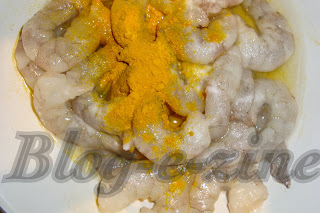
enchor -chingri (prawns with green jack fruit). There are several other such dishes with leafy vegetables, potato and other vegetables. One friend of ours has gone further and patented on a nice combination of cauliflower and prawns. Which I also cook a lot specially while friends are invited. So I decided to use the prawns in my mixed vegetable medley. Deveined and cleaned they already were. I readied them by sprinkling some salt and turmeric powder on.
So after all the arrangements, I heated a wok, added oil, added the
panch phoron (five spices), bay leaves and slitted green chilli peppers. Sauteed a little and then added the vegetables along with the chopped onions, only the tomatoes were kept aside. Let them time to be soft, take colour and mingle with each other. On the way as my hands were still itching so I added some
pav-bhaji masala powder (just like famous
garam masala, it is yet another blend of Indian grounded spices in particular proportion, but are also available readymade in Indian/Asian stores or even from Amazon from companies like
Badshah
,
Shan
,
MDH
etc). Kept stirring till oil starts coming off, added the prawns and finally I added the chopped tomatoes.
After little more stirring, added some ( half a cup or so) water, covered the wok while turning the heat to low.
In between I saw outside was still bright and my "Friday-free" mind cajoled me to take some shots of uncontrollable wild growing in my backyard.
After 10-15 minutes, opening the cover filled the kitchen with soft aroma of all vegetables along with the salty smell of prawn. Boiled plain rice was ready in the microwave.
So I and 'J' had a delicious dinner of mixed vegetable-prawn medley, rice, and some
masoor Dal , sizzled with fresh coriander leaves (Hindi for red lentil soup). My picky eater 'J' liked the medley for the prawns and not so strong flavour left of any greens used here. She when licked her finger saying yum, I added "Absolutely perfect for a Friday evening"!
If you are longing for more, here are some links for other mixed vegetable recipes for your hungry mind which are cooked in different parts of India:
Avial (from southern India)
Pav-bhaji (Mainly from Bombay or western India)
Enjoy your meal! Bon appetite


